
Dual Polyamide Thin-Film Composite Membrane With Multiscale Hetero-Channels and Mosaic Charge Architecture...
Citation
Zifeng Cao, Baohu Wu, Haoyuan Sun, Huiqing Wu* and Peiyi Wu*. Dual Polyamide Thin-Film Composite Membrane With Multiscale Hetero-Channels and Mosaic Charge Architecture for Boosting Ion Transport and Osmotic Energy Conversion. Angew. Chem. Int. Ed. 2026, 65, e4186742.
Abatract
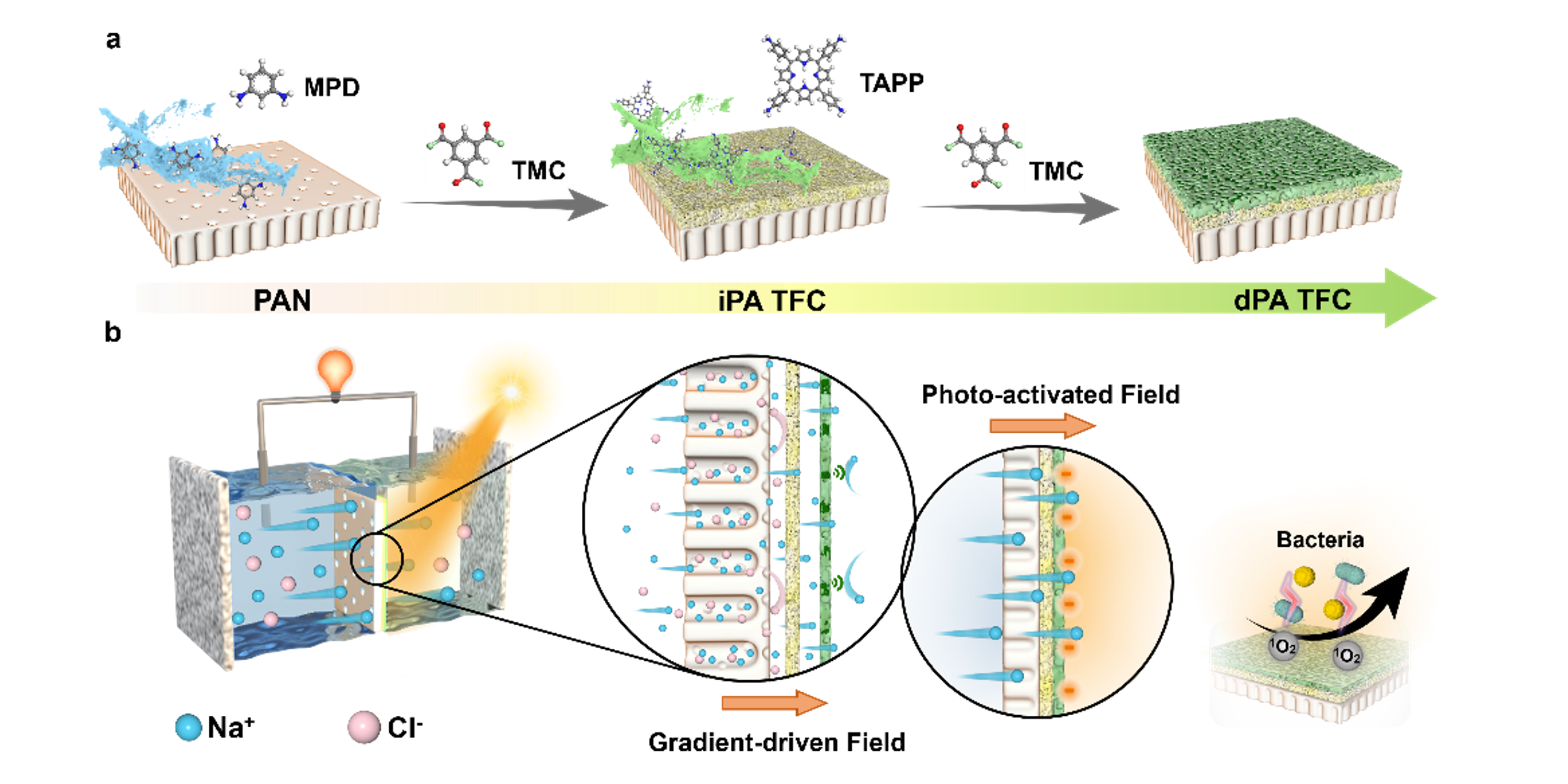
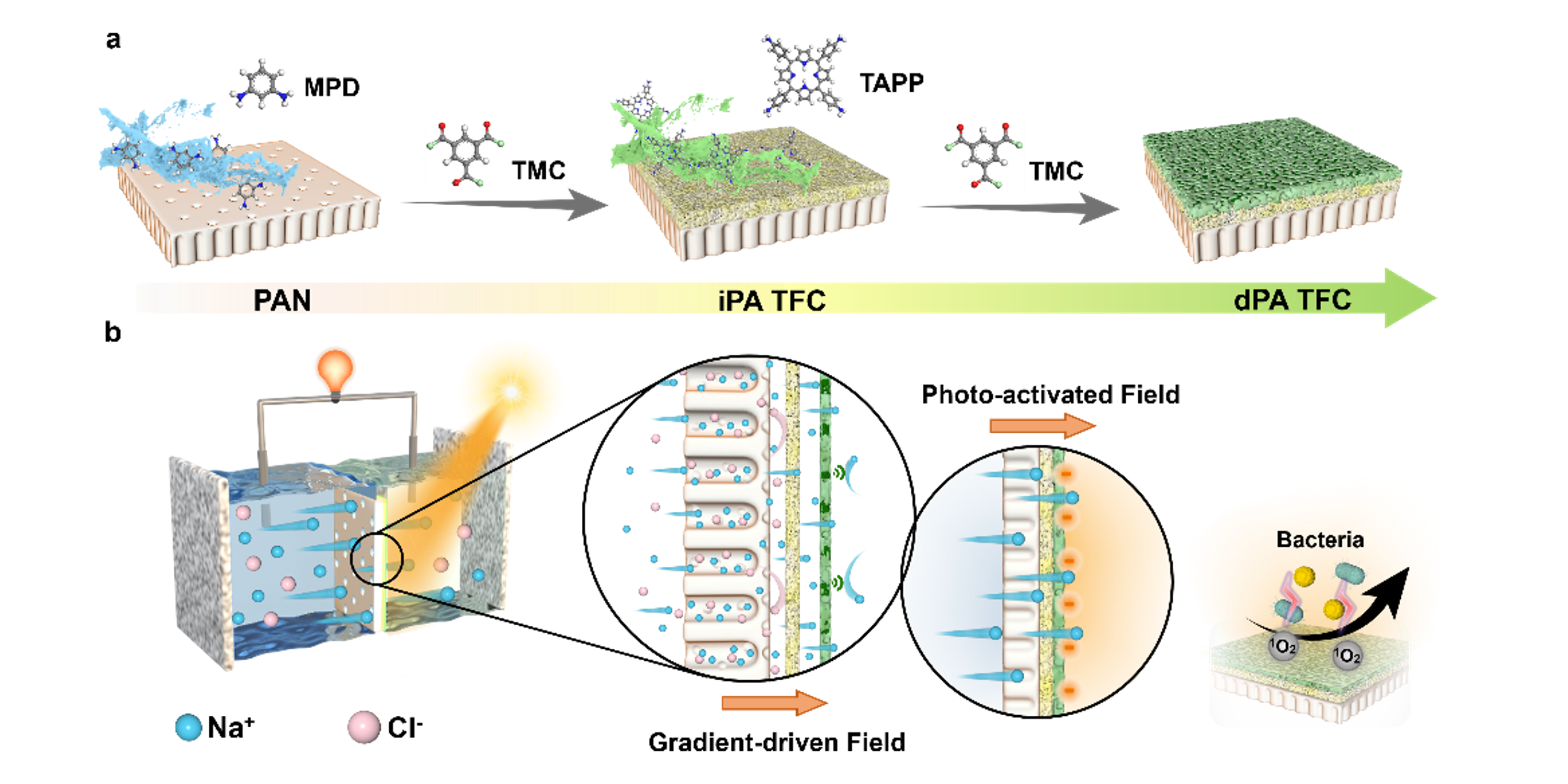
Asymmetric ion-selective membranes show promise for efficient osmotic energy harvesting. Most current asymmetric membranes adopt a bipolar structure to mitigate concentration polarization. However, this approach usually increases transport resistance and compromises ion selectivity. To address these, we rationally designed a dual polyamide thin-film composite (dPA TFC) membrane via sequential interfacial polymerization (IP). The membrane is composed of two distinct polyamide (PA) layers in situ formed on a macroporous substrate. Through a surfactant-assisted IP process, an ultrathin inner PA layer with a uniform and negatively charged 3D pore structure was obtained, delivering both high ion selectivity and permeability. Subsequently, a loose outer PA layer featuring a mosaic charge architecture was constructed using protonated porphyrin as a building block. This layer promotes significant unidirectional ion transport and effectively suppresses concentration polarization, while maintaining a high cation selectivity of 0.962. Additionally, the membrane exhibits photo-responsive behavior, enabling photo-enhanced osmotic energy conversion and antibacterial activity. As a result, the dPA TFC membrane achieves a high osmotic power density of 13.2 W m−2 under light irradiation. This work provides a design paradigm that overcomes the conventional permeability-selectivity trade-off while simultaneously balancing ion concentration polarization suppression with high selectivity, thereby advancing the development of osmotic energy conversion systems..